
 By admin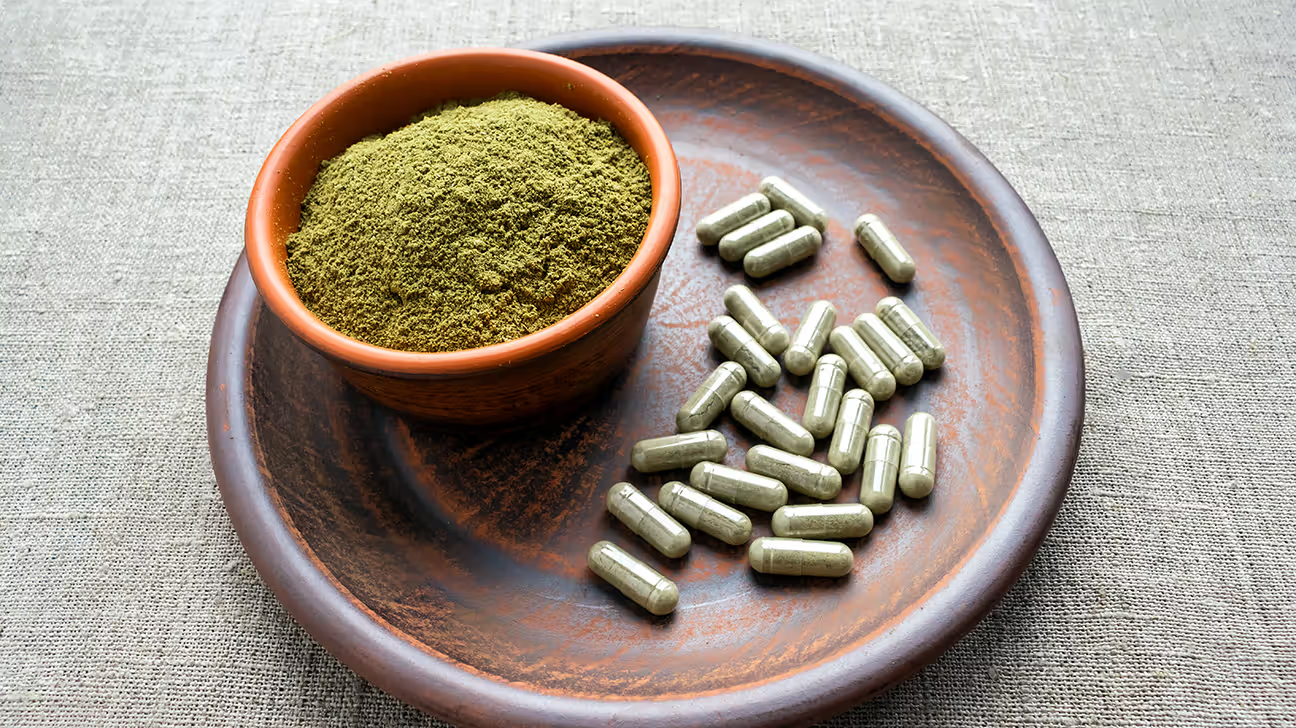
Broader Kratom Interest Creates Fresh Dialogue Around Mindful Wellness Choices because more adults are asking what kratom is, what product labels mean, plus what risks deserve attention. Searching for best kratom shouldn’t be treated as proof that one product is safest or suitable for wellness use. Current evidence supports careful research rather than broad health promises.
What is kratom and where does it come from?
Kratom comes from mitragyna speciosa, a tree native to Southeast Asia. Its leaves contain many naturally occurring compounds called alkaloids, including mitragynine plus 7 hydroxymitragynine.
Kratom products can differ greatly in composition. That variation makes clear labelling plus reliable testing particularly relevant when people compare products.
What should people know before comparing kratom?
A search for the best kratom often leads to powders, capsules, or concentrated products. Yet product format alone says little about quality or safety. Before trusting claims, look closely at:
- Complete ingredient information rather than vague botanical descriptions
- Batch identification that connects products to specific testing records
- Independent laboratory reports covering contaminants plus stated alkaloid content
- Clear company contact information for questions about testing
- Labels that avoid promises about treating health conditions
Personally, I’d treat unusually dramatic wellness claims as a reason to investigate further rather than a reason to buy.
What does current regulation say about kratom?
In the United States, the FDA states that no prescription or over-the-counter drug containing kratom or its known alkaloids is legally marketed. The agency also says kratom isn’t lawfully marketed as a dietary supplement or added to conventional food.
That matters because marketing language can easily sound more established than the underlying evidence.

What numbers help explain current kratom concerns?
Kratom leaves contain more than 50 alkaloids, according to a 2026 FDA scientific assessment. The same assessment reports that naturally occurring 7 OH generally represents only about 0.01% to 0.04% of dry botanical material.
That distinction matters. In July 2025, FDA reported sending seven warning letters involving concentrated 7 OH products. The agency specifically distinguished these concentrated items from the trace amounts naturally present in kratom leaves.
Frequently Asked Questions About Kratom Choices
- Does FDA approve kratom for wellness purposes? No, FDA says there are currently no approved prescription or over-the-counter kratom drugs.
- Are all kratom products chemically identical? No, Botanical composition plus manufacturing methods can create meaningful differences between products. Concentrated 7 OH products are particularly distinct from traditional leaf material.
- Can laboratory testing make kratom completely safe? No, Testing may reveal certain contaminants or measured compounds, but a laboratory report doesn’t establish overall medical safety.
- Should kratom replace prescribed treatment? No, Kratom hasn’t been FDA-approved to treat medical conditions. Replacing established care based on unproven claims can create avoidable risks.
Careful Choices Start with Reliable Information
Kratom discussions are becoming more detailed because product quality, concentration plus health claims aren’t simple issues. The strongest approach is consistent: verify information, question unsupported promises plus understand regulatory warnings before making decisions.
Perfection isn’t a useful standard here. Careful habits matter more. Consistently checking credible evidence creates a sounder basis for wellness decisions than relying on rankings or marketing language alone.